
A first for China! A wearable ultrasound therapeutic device has officially received its medical device registration certificate and production license—ushering in a new era for ultrasound therapy!
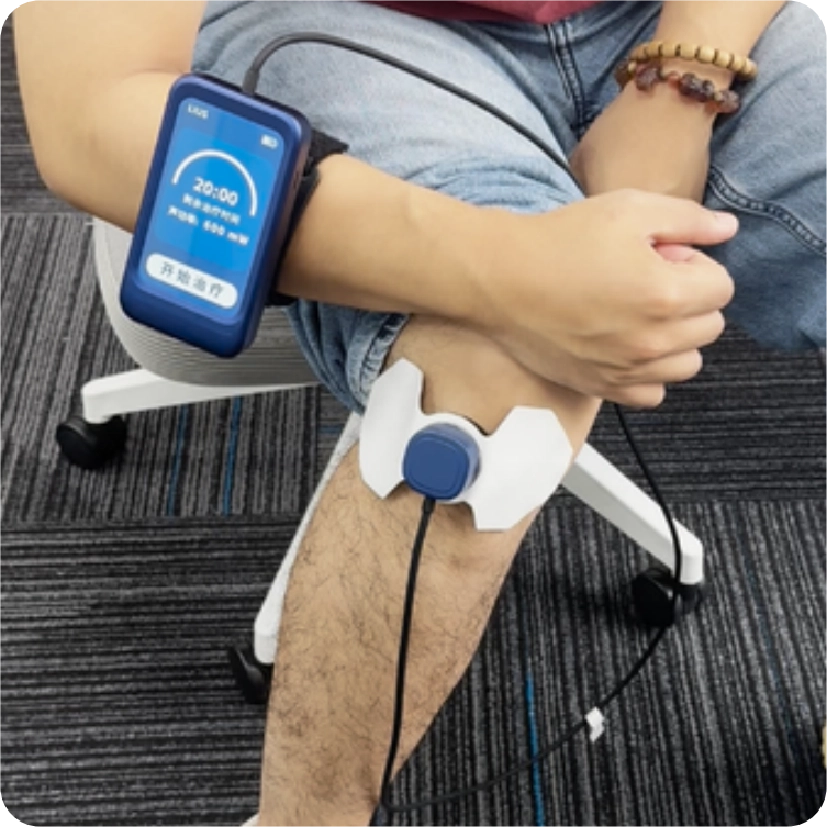
China Grants First Medical Device Registration for Wearable Ultrasound Therapy Device, Opening New Horizons for Portable Physiotherapy
The device adopts a lightweight, patch-type form factor that patients can wear directly on the affected area during daily activities — a significant departure from conventional bulky ultrasound therapy machines that require hospital visits.
Key technical features:
Low-intensity pulsed ultrasound (LIPUS) delivery
Flexible, skin-adherent design for continuous wear
Targeted at osteoarthritis, soft tissue injuries, and chronic pain management
Promotes local blood circulation, reduces inflammation, and accelerates tissue repair
Regulatory Significance
This is the first wearable ultrasound therapy device to receive formal registration under China's NMPA framework. It establishes a clear regulatory pathway for similar products in the future and signals that Chinese authorities are opening the door to consumer-grade physiotherapy devices with proven safety and efficacy data.
Market Context
While overseas markets have seen comparable products — such as Zetroz's SAM Sports patch and Manamed's Manasport device, both FDA-cleared — China's domestic wearable ultrasound sector has been slow to gain regulatory traction until now. This approval changes that.
For international distributors and partners, this represents:
A certified OEM/ODM-ready product with full NMPA documentation
Access to China's rapidly aging population — a massive end-user market
A proven regulatory template for bringing similar wearable ultrasound devices into China or co-developing region-specific variants
What This Means for International Partners
The device is not positioned as a cure for degenerative conditions such as osteoarthritis, but as a clinically validated adjunctive therapy that significantly improves patient compliance — a key pain point in physiotherapy worldwide. Patients no longer need to commute to clinics; they can maintain treatment regimens at home or on the go.
Outlook
As China's medical device industry shifts toward portable, intelligent, and home-based solutions, wearable ultrasound technology is poised to become a high-growth category. Companies with existing distribution networks in physiotherapy, orthopedics, and sports medicine are well-positioned to capitalize on this emerging segment.