
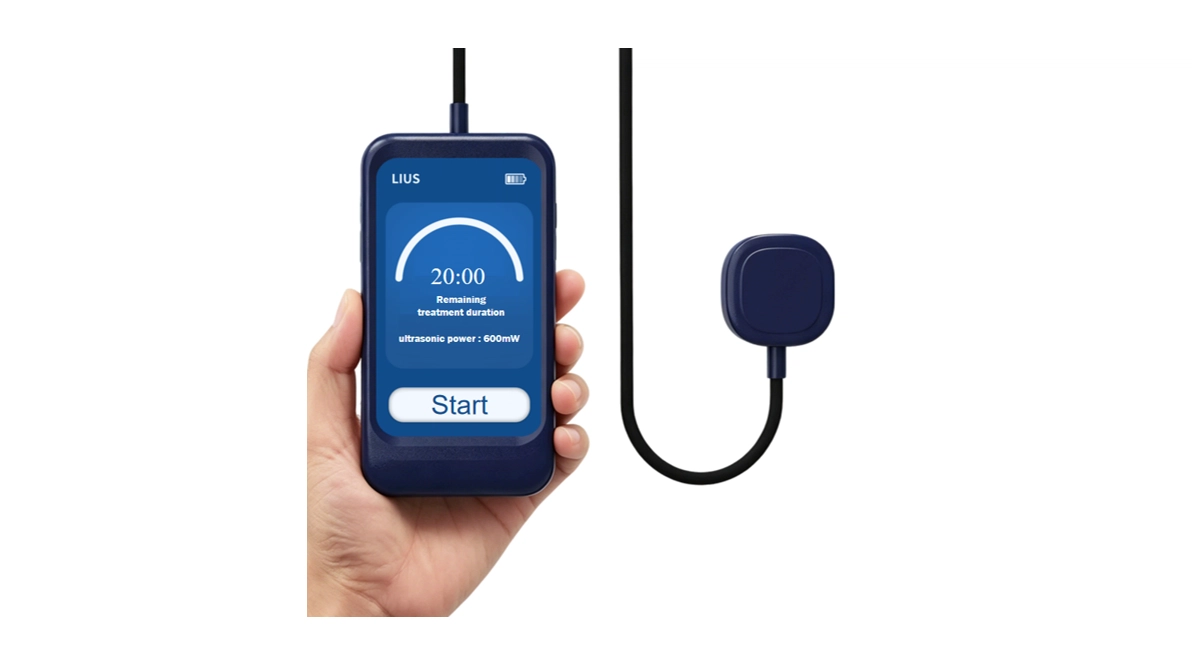
ULT200/ ULT200A Wearable Ultrasonic Therapeutic Device
Wearable Ultrasonic Therapeutic Device
OEM/ODM and private-label options available on request — ask our export team.
INTRODUCTION
| Parameter | Specification |
|---|---|
| Rated Output Acoustic Power | 0.6 W ±20% |
| Acoustic Operating Frequency | 600 kHz ±15% |
| Transducer Focal Plane Distance | 28 mm ±15% |
| Beam Type | Converging (focused) type |
| Pulse Duration | 0.9 ms ±10% |
| Pulse Repetition Period | 2.5 ms ±10% |
| Duty Cycle | 36% ±10% |
Indications for Use: For use under the guidance of physician. Indicated for the relief of pain associated with knee osteoarthritis.
Color:ULT200A is the blue version of the model. ULT200 is the black version of the model.
FEATURE
- Proprietary acoustic field specifically engineered for knee osteoarthritis, with standardized ultrasound treatment protocols that reduce the workload of therapists.
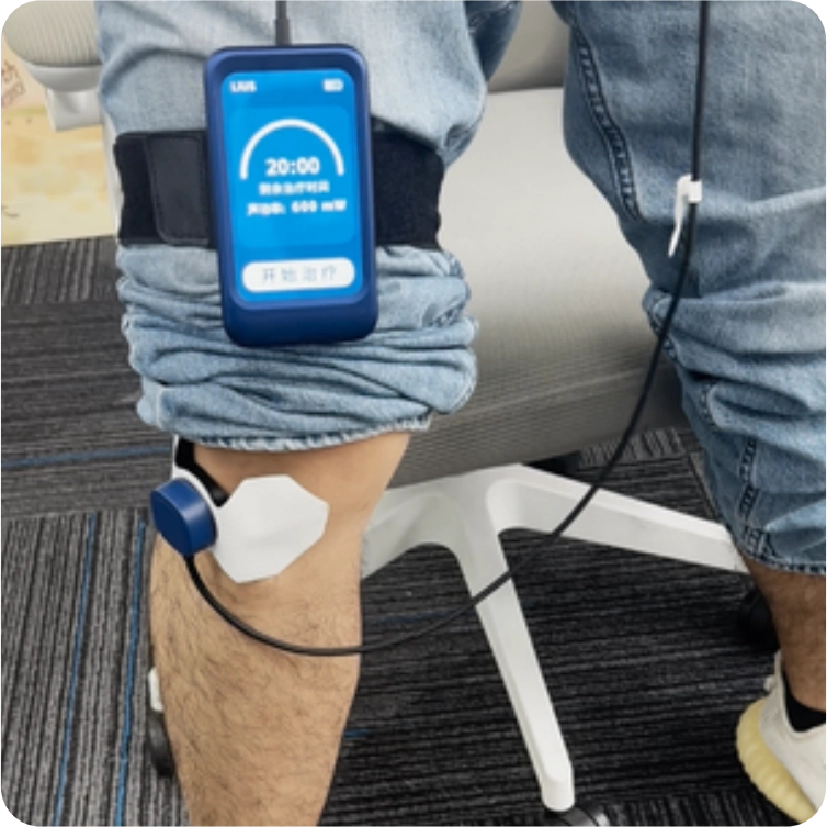
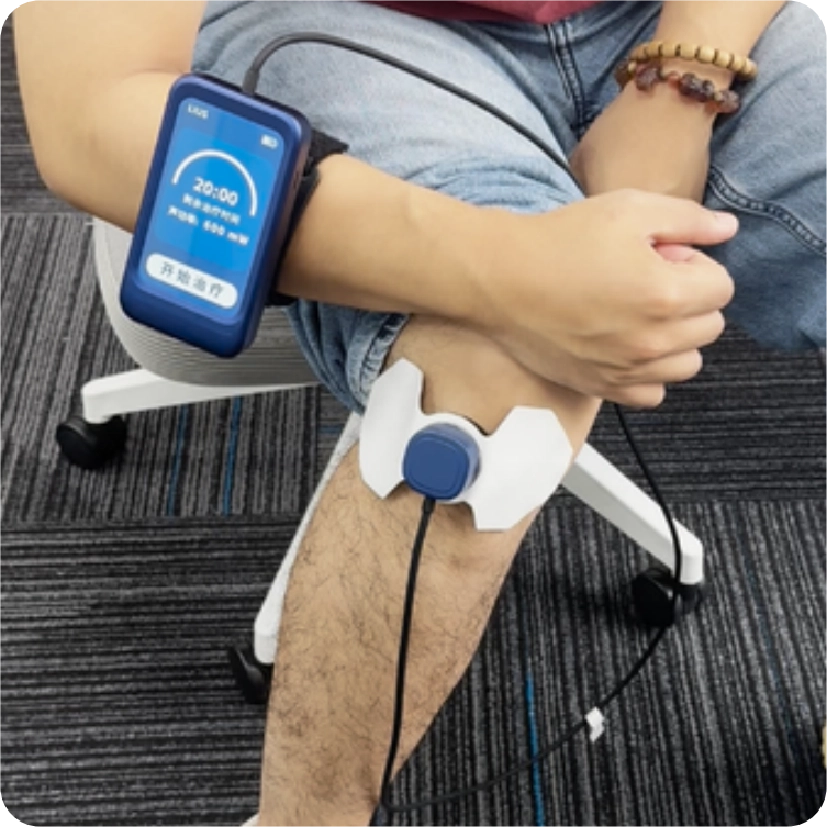
- Lightweight, wearable transducer eliminates the need for therapist-assisted hand-holding during treatment; automatically shuts off after 20 minutes to prevent overtreatment.
- Wireless and portable design enables convenient therapy at home or on the go; equipped with a large, high-definition display for easy operation.
- Universal charging interface and long-lasting battery ensure minimal recharging frequency for everyday use.
Two Primary Bioeffects of Ultrasound Therapy
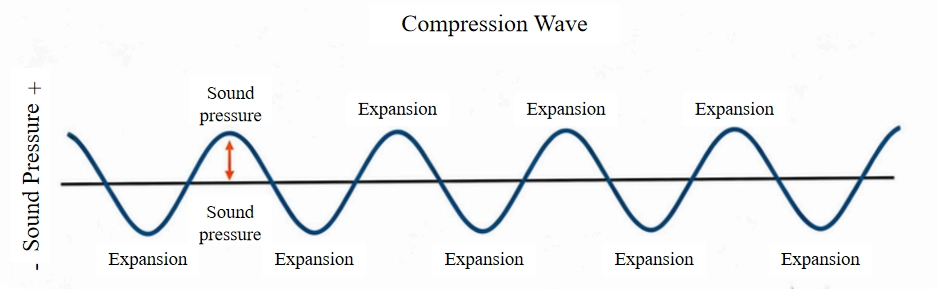
1. Mechanical Microvibration Effect
The acoustic pressure differential generates micron-scale cyclic compression and relaxation within cells and the extracellular matrix, thereby modulating cellular activities.
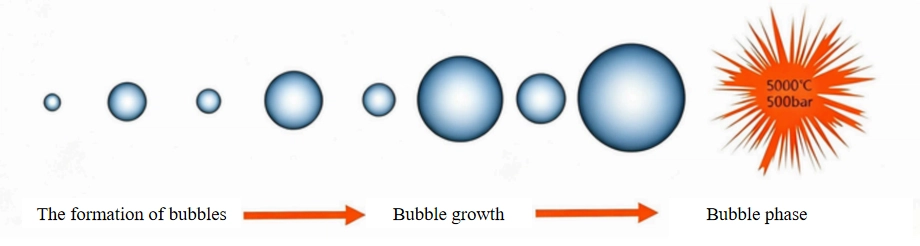
2. Cavitation Effect (stable cavitation only; no destructive transient cavitation)
Induces localized microstreaming and mild fluid shear stress, which enhance cell membrane permeability, facilitate the transport of nutrients and growth factors, and promote the clearance of pro-inflammatory metabolites.
Mechanisms of Action in Ultrasound Therapy for Knee Osteoarthritis
- Cartilage Repair Aspect
Low-frequency, low-energy pulsed mechanical vibrations are transmitted to the articular cartilage, modulate the subchondral bone, and repair periarticular soft tissues through a triple-action pathway. These effects promote cartilage matrix synthesis and defect remodeling, improve trabecular bone architecture and stabilize the cartilage–bone interface, and enhance tendon/ligament elasticity as well as mechanical stability of the knee joint. Collectively, they slow cartilage wear and reduce secondary joint damage.
- Anti-inflammatory and Analgesic Aspect
Downregulates pro-inflammatory cytokines such as IL-1 and TNF-α, inhibits synovial hyperplasia and local joint inflammation. It also modulates nociceptive transmission at nerve endings and promotes local microcirculation, thereby alleviating joint swelling and reducing both resting and movement-induced pain.
Reference
Zhou J, Ning E, Lu L, et al. Effectiveness of low-intensity pulsed ultrasound on osteoarthritis: molecular mechanism and tissue engineering. Frontiers in Medicine, 2024, 11: 1292473.